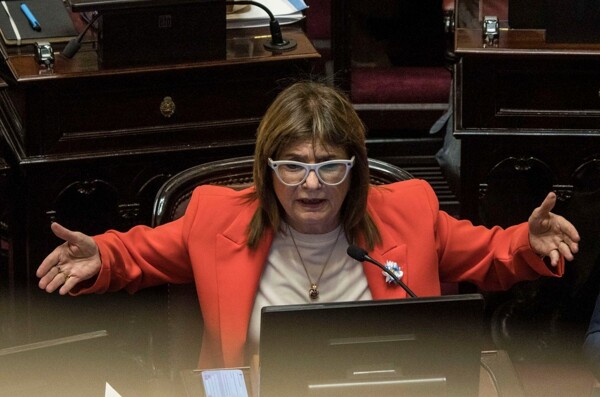
Negotiations are taking place between the ruling coalition and allied factions with the aim of maintaining the majority for the general vote and preventing the issue from becoming a breaking point for the entire reform. The legislative consequence of this change is direct: if the Chamber of Deputies modifies article 44, the project must return to the Senate for its final sanction. Buenos Aires - February 17, 2026 - Total News Agency - TNA - The head of the Senate bloc of La Libertad Avanza, Patricia Bullrich, admitted that the ruling coalition made a 'mistake' by not distinguishing between serious and mild illnesses in the chapter on medical licenses of the labor reform approved by the Senate, and confirmed that the article will be corrected during its consideration in the Chamber of Deputies. The Government, for its part, insists that the objective is to regulate abuses, reduce litigation, and promote formal employment, and that adjustments should not be interpreted as a general rollback but as a modernization of the regime. In Congress, the discussion left a political fact: the ruling coalition managed to advance with an extensive reform, but it exposed the fragility of its parliamentary coalition when one article concentrates social costs and opens technical vulnerabilities. The admission, unusual for the front line of the ruling coalition, was read in Congress as a gesture of political realism: the original text threatened to fracture the support of allied blocs and could complicate the session planned for this week in the lower house. The focus of the controversy is on article 44 of the project, which replaces article 208 of the Labor Contract Law. In her public explanation, Bullrich pointed to the central problem of the wording: 'we failed to clarify severe, degenerative, or irreversible diseases,' and argued that this gap needed to be filled to prevent the regime from treating 'equally' situations of radically different severity. 'This can happen when you have more than 200 articles,' argued the senator, who also sought to frame the conflict as a technical failure rather than a deliberate change. As voted in the Senate, the section allows for reducing payment during medical leave for work-related accidents or illnesses: it establishes the collection of 50% of the salary, and considers 75% under certain conditions. However, in the ruling coalition, they admit that the political reaction was the real trigger for the turnaround. Bullrich's admission of the error thus served as a message inward and outward: showing a willingness to correct to preserve the overall reform. The episode also occurs in a climate of high social sensitivity, with trade unions denouncing that the reform seeks to cut rights and shift risks to the worker, and with the recent precedent of protests during the Senate's consideration. The correction that Bullrich now promises aims to contain that risk and prevent the reform from reaching the vote with a blind spot that fuels the accusation of 'cutbacks due to illness.' In the ruling coalition, they assume the cost of the 'back and forth' as the price for not losing the vote in the lower house. The roadmap they are handling in Congress points to rewriting the article during the particular discussion in the Chamber of Deputies, with a wording that introduces explicit distinctions between mild or transient ailments and serious or irreversible pathologies, and that more precisely defines the assumptions under which a reduction in the benefit is applied. The discussion on medical leave sparked resistance even in sectors that had been accompanying the core of the reform, particularly due to the fear that the change would enable cuts in extreme cases and open a gray area for discretionary interpretations. In those blocs, the idea of 'fixing it later'—either through an executive regulation or a complementary norm—was flatly rejected: they considered it equivalent to signing a blank check and shifting the cost of the adjustment to the sick worker. In this context, the correction became a political condition to move forward. In the labor center, they warn that the medical leave chapter is a symbol because it touches a basic principle of labor law: the protection of income in the event of being unable to work due to illness. The immediate showdown will be to write a text that closes the deal with allies, limits interpretations, and sustains the legislative schedule without the Government paying a higher price on the street and in the chamber. In parliamentary offices, they note that the allies made it clear that they would not accept 'patches' outside the text and that, if the article remained as is, the support could dilute.

Ruling coalition admits error in Argentina's labor reform
The head of the Senate bloc of La Libertad Avanza, Patricia Bullrich, admitted that the ruling coalition made a mistake in the labor reform by not distinguishing between serious and mild illnesses. Article 44, which reduces sick pay, will be corrected in the Chamber of Deputies to maintain allied support and avoid a parliamentary split.